

Meet Biv.
The first stimulus-response model for product development.
Biv predicts how users will react to a product change and how that could affect your metrics before you ship.
Frontier LLMs are terrible at predicting what real users will do.
LLMs are trained to be polite, patient, and reasonable, and they’ve become useful tools for getting work done.
Real people are rarely so accommodating. They lose patience. They change their minds, and they don’t always do what makes sense on paper.
That makes LLMs terrible stand-ins for your users. Their agreeable, rational responses can reinforce your assumptions and leave you blind to where real people will struggle, lose interest, or walk away.
We started Tenera to help businesses decide what to build. To do that, we need to predict how people will behave when a product changes.
User simulation often approaches this by asking an LLM what someone would think or do, sometimes using a model trained on survey responses. But those responses describe what people say, and saying you’d subscribe is different from paying.
This gap matters because decisions depend on circumstances a survey may never capture, including personal worries and past experiences.
We learn from real human behavior. Actual purchases and abandoned checkouts give us observed outcomes to train on and test our predictions against.
With Biv, we’re building a new kind of intelligence trained on behavior, with room for people to be savage, chaotic, and completely unhinged. Its predictions have to hold up when people use the product.
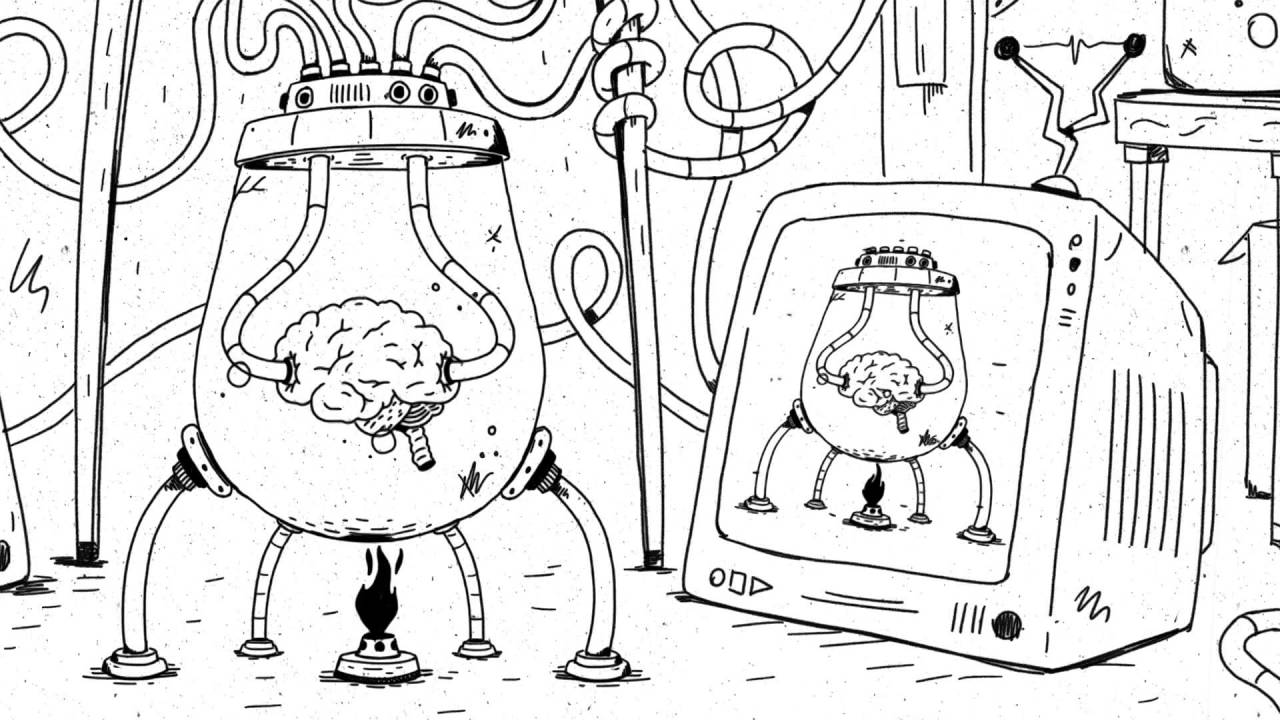
Biv describes how we behave in virtual worlds. The name comes from “Brains in a Vat,” a thought experiment about experiencing a world supplied by a computer. The question is much older than computers.
In Zhuang Zhou’s butterfly dream , was he a man dreaming of being a butterfly, or a butterfly dreaming of being a man?
Descartes asks whether we can distinguish dreams from waking life. Putnam uses a brain in a vat to question how words connect to reality.
For Biv, that curiosity becomes a practical question: can we recreate enough of someone’s context to anticipate their behavior? Our bet is that human behavior can be simulated well enough to help people decide what to build. We’re starting with software, where we can change a person’s environment and test our predictions against what they actually do.
Today’s LLMs are showing us how AI can build software. With Biv, we want AI to know what to build, too.
That opens up a future where AI can create products and run entire software businesses on its own. Eventually, the software industry (the virtual world) could operate without depending on human labor, with AI owning and running businesses across the market.
At Tenera, we’re building the models to make that future happen. It starts with Biv and a goal: AI that knows what to build and how to build it. We want to lead that work and make sure people can understand what these systems are doing and stay in control.
Predicting words. Predicting actions.
LLMs learn extensively from what people write and say. Predicting what users actually do after a product changes is a different task. The benchmarks below measure each task differently.
What users could say
~75%Survey-response baseline. In one 19-study benchmark, digital twins reached 74.8% normalized agreement with rich personal profiles, versus 73.4% without personal information. Agreement is one minus average error on responses scaled to 0–1.
What users would do
~12%User-behavior baseline. General LLMs averaged ~12% next-action matches in our benchmark below.
References 11 papers
| Paper & authors | How the evaluation works | Reported result |
|---|---|---|
| Structuring Survey Histories for LLM Digital TwinsIris Ye, Tianze Deng & Ozan Candogan · Nov 2026 · SocialAgent workshop at NeurIPS (accepted) | 100 respondents from Twin-2K-500. Give each LLM prior survey answers; predict held-out answers on 17 tasks. Compare structured profiles with raw transcripts. | +1.27 ppaccuracy gain over raw context · GPT-5.4 nano |
| Simulated responses from large language models are weak proxies for human economic preferences across 74 countriesFadong Chen et al. · Oct 2026 · Nature Human Behaviour | 67,201 matched respondents in 74 countries. Prompt 20 LLM configurations with demographics and location; compare six economic preferences with human surveys. | 77.8%demographic association-direction agreement |
| When Synthetic Users FailZihan Chen, Di Zhu & Lei Nico Zheng · Revised Oct 2026 · Preprint | Four LLMs answer GSS and WVS questions from demographic profiles. Compare exact answers with held-out human data and non-LLM baselines. | 58.9%best exact-match accuracy · GSS · Sonnet 4.6 |
| Digital twins are funhouse mirrors: Five systematic distortionsTianyi Peng, Melanie Brucks, George Gui et al. · Sep 2026 · Science Advances | 19 preregistered studies, 164 outcomes. GPT-4.1 receives 500+ prior answers per person. Score: 1 minus mean absolute error on responses scaled to 0–1. | 74.8%scale-normalized agreement |
| Large language models outperform humans at estimating society’s everyday normsKimmo Eriksson, Simon Karlsson, Irina Vartanova & Pontus Strimling · Sep 2026 · Communications AI & Computing | Estimate U.S. appropriateness ratings for 555 everyday scenarios. Compare six LLMs with 320 people. Score is the best model’s mean absolute error on the original 0–9 scale, averaged across individual runs; lower is better. | 0.78mean absolute error · best single-run LLM |
| Large language models can predict the results of social science experimentsAshwini Ashokkumar, Luke Hewitt, Isaias Ghezae & Robb Willer · Jul 2026 · Nature | 70 U.S. survey experiments, 469 effects, 119,330 participants. Give GPT-4 demographics, treatment text and outcome questions; aggregate simulated answers into treatment effects. | 0.85effect-size correlation (r) |
| LLM Agents Grounded in Self-Reports Enable General-Purpose Simulation of IndividualsJoon Sung Park, Carolyn Q. Zou, Jonne Kamphorst et al. · Revised Jun 2026 · Preprint | 1,052 people. Supply interviews, surveys, or both; predict held-out GSS answers. Divide model accuracy by each person’s two-week test–retest consistency. | 86%of human test–retest consistency · interviews + surveys |
| Twin-2K-500: A Dataset for Building Digital TwinsOlivier Toubia, George Z. Gui, Tianyi Peng et al. · Aug 2025 · Marketing Science | 2,058 people complete four survey waves. Give GPT-4.1-mini their prior answers and predict 17 held-out tasks. Score combines binary matches and normalized numerical agreement. | 71.72%average response-prediction score · text personas |
| A Turing test of whether AI chatbots are behaviorally similar to humansQiaozhu Mei, Yutong Xie, Walter Yuan & Matthew O. Jackson · Feb 2024 · PNAS | Compare GPT-4 with human play in eight economic-game roles. In paired draws, measure how often its action is more typical of the human distribution than a randomly sampled human’s action. | 45.2%pairwise human-typicality wins · not prediction accuracy |
| Using Large Language Models to Simulate Multiple Humans and Replicate Human Subject StudiesGati Aher, Rosa I. Arriaga & Adam Tauman Kalai · Jul 2023 · ICML | Test GPT models on the Ultimatum Game, garden-path sentences, Milgram obedience and wisdom of crowds. Three studies reproduce known patterns; the fourth reveals overly accurate answers. | 3 of 4experimental patterns reproduced · not an accuracy score |
| Out of One, Many: Using Language Models to Simulate Human SamplesLisa P. Argyle, Ethan C. Busby, Nancy Fulda, Joshua Gubler, Christopher Rytting & David Wingate · Feb 2023 · Political Analysis | Condition GPT-3 on real ANES respondents’ demographics and political backgrounds. Compare predicted vote choice with self-reported votes; this score is for the 2020 whole sample. | 89%vote-choice agreement · 2020 sample |
~4× the behavior alignment of the best competing LLM.
Predictive overlap with actual human behavior (%)
We worked with a leading marketplace company to post-train our base Biv model using user behavior data from before August. We first checked how well it could reproduce their users’ August behavior. Then, in early September, we predicted how behavior would shift after a major product update. We waited until the month ended to compare those predictions with what users actually did. Overlap measures how many of the model’s predicted next actions matched what users actually did. A higher score means a closer match.
Predicting how real users will behave after a product change is still a relatively unexplored task for today’s LLMs. Yet Biv achieved 69% overlap for August and 55% for September, even after the product changed: roughly 4× the strongest competing LLM’s 14% in September.
| Model | Relative time (Biv = 1×) | Relative cost (Biv = 1×) |
|---|---|---|
| Biv | 1× | 1× |
| GPT-6 Astra | 3.02× | 284× |
| GPT-6 Luna | 4.66× | 3.47× |
| GPT-6.1 Sol | 2.25× | 56.85× |
| Opus 5.5 | 1.07× | 144× |
| Gemini 3.8 Flash | 8.19× | 34.39× |
| Gemini 4 Argon | 4.36× | 49.41× |
| Fable 5.1 | 3.02× | 382× |